ARCHIVIO MAGAZINE × ITALIAN TECH WEEK
50 Years of Computing: Gold, Ceramic & AI Coding
THE CONTEXT
Anything can become anything else, and nothing is created from nothing
In September 2025, consumer computing—the world of personal computers, smartphones, software, the internet, and AI for everyone—will turn 50. In its early days, the innovative, low-cost microprocessors that sparked this revolution were still based on traditional materials.
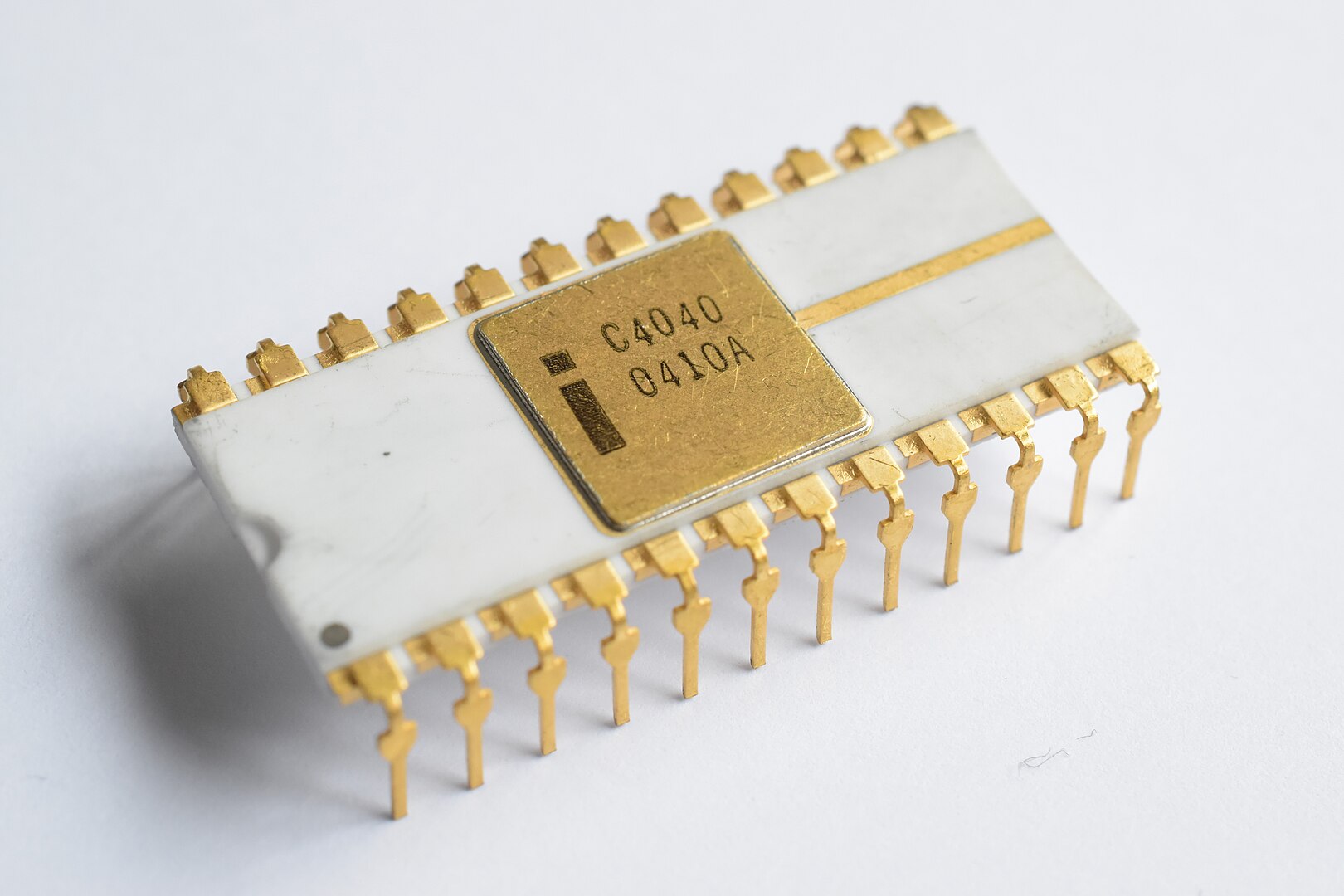
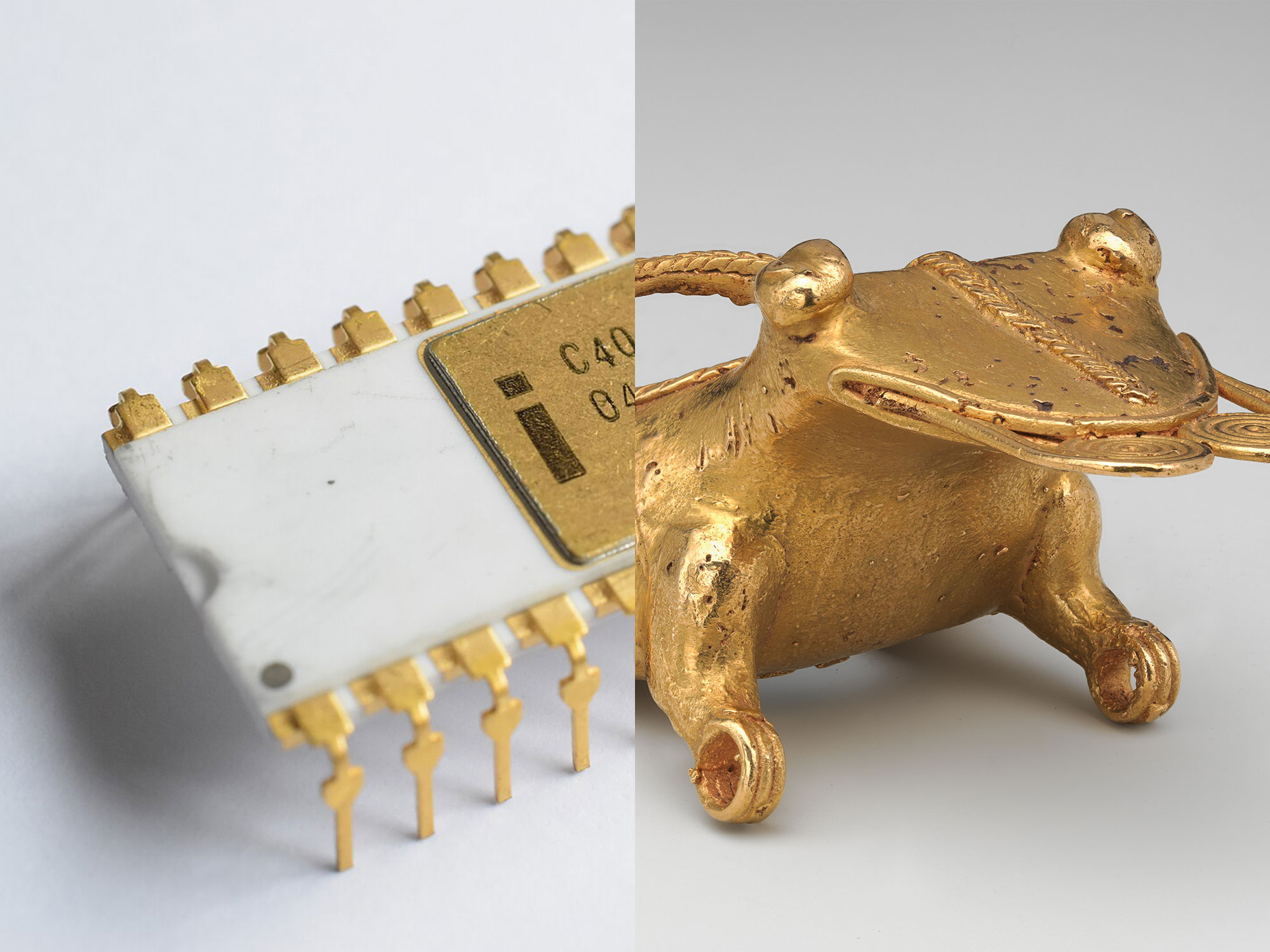
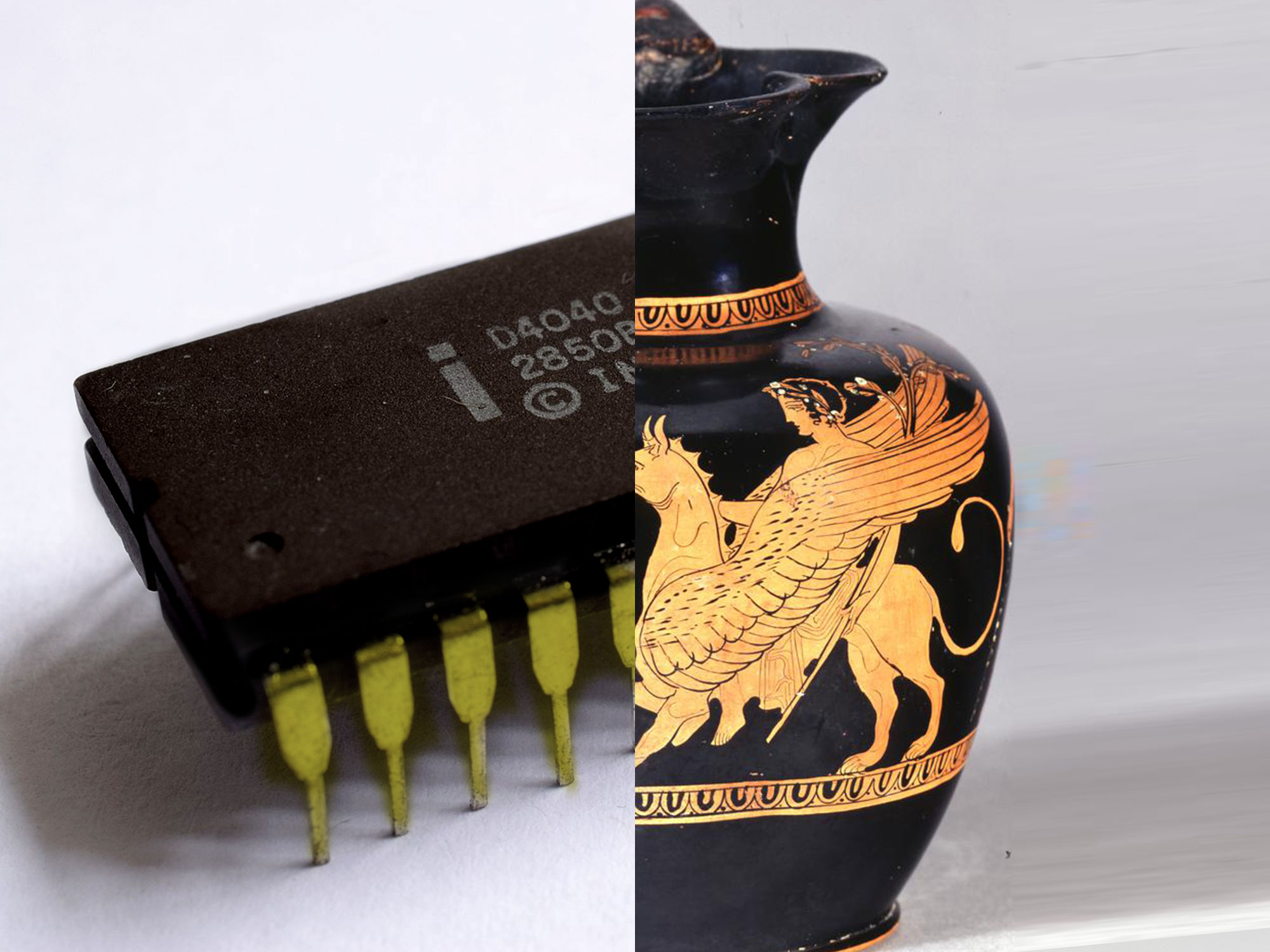
Ceramic and gold, once used in ancient Greece to craft ritual vases or in pre-Columbian Mesoamerica to shape jewelry, became in the 1970s the conduits for a new intelligence. They were the insulating structures and conductive pathways that gave physical form to silicon, creating the foundation for a technological evolution that would change every aspect of our lives.
The same materials, but different times. The same materials, but different human artifacts. The same materials, but different futures.
THE AI GENERATIVE SYNTHESIS
AI divertissements to envision impossible futures
The project will take the form of a small exhibition, consisting of one or more AI-powered video installations (up to 5). Each of the installations begins with a simple, yet profound juxtaposition: on one side, a piece of historical technology; on the other, an ancient artifact. While separated by millennia, they share a common language of materials, such as traditional gold and ceramic.
Between these two poles, a generative AI software brings them into an impossible dialogue. Trained on a vast archive—cataloging technological components and ancient artifacts—the AI learns their distinct visual grammars. It then blends these separate histories to generate new aesthetic and technological possibilities, creating forms that are neither fully machine nor entirely art, but a speculative fusion of both.
The AI-generated impossibile mutations explore how creativity is born from synthesis, how originality emerges from remixing the known, and how innovation is often an act of translation across disciplines. The installations are invitations to reflect on the power of context (everything around us) in shaping meaning. Ultimately, the installations are a meditation on learning itself—a process of forging new connections between the things we thought we understood.
EXHIBIT LAYOUT
Historical Technology, Ancient Artifacts, and AI-Powered Mutations
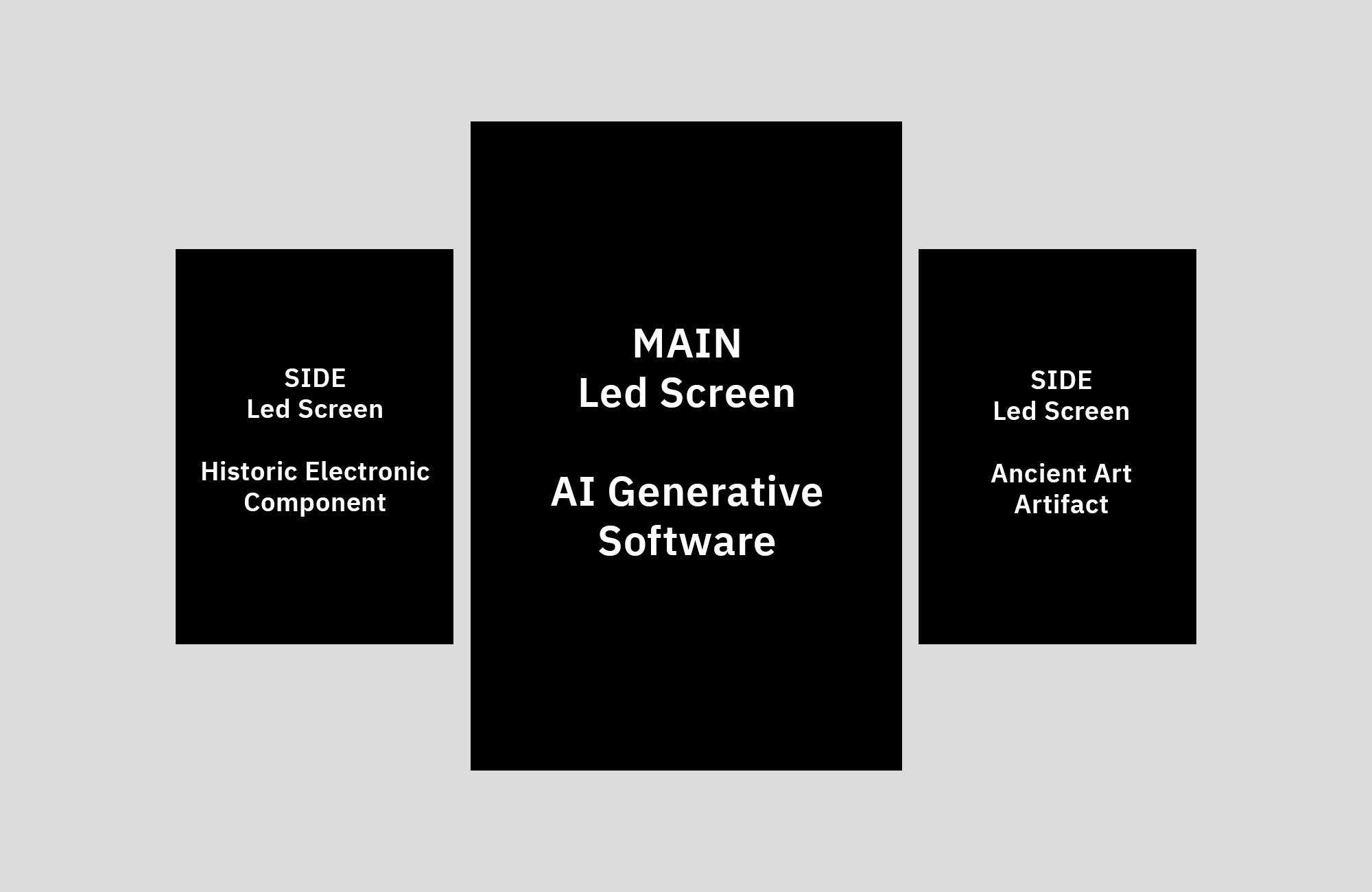
Each installation consists of one main screen and two side screens.
The two side screens represent the poles of the dialogue: one displays the historic electronic component, the other the ancient artifact. They are two human artifacts from vastly different eras and with very distinct purposes, yet both are crafted from the same traditional materials, like gold and ceramic.
The central screen displays the video mutations generated by the AI software. Trained on archives of historic electronics and ancient artifacts, the AI melds their visual patterns to create entirely new technological forms and functions.